BY
UCHENDU, PATRICK C.
A constitutional democracy is in serious trouble if its citizenry does not have a certain degree of education and civic virtue’. - Philip E. Johnson.
Since independence Nigeria has been in a state crisis. One can hardly recall the last time in our history as a nation we enjoyed some moment of peace. Between 1960 and 1966, the nation was engulfed in series of controversies that degenerated into bloody conflicts which eventually sealed the fate of the First Republic. The advent of military rule did not help matters; if anything, it further exacerbated the already fragile state of the nation, as no real attempt was made by our leaders to run an all-inclusive government in which citizens exercised their rights to participate in the country’s affairs. Hence the gap between the leaders and the led.
Successive governments, military and civilian alike, did not do much to bridge this gap or sustain any effort made in that direction. This general trend towards the alienation of the citizenry from the art of governance has made the masses lose touch with the demands of citizenship. Most have even lost faith in the nation. The sudden rise in the level of insecurity in the country in recent times as a result of the activities of the dreaded Islamist fundamentalist sect, Boko Haram, must be viewed in this light.
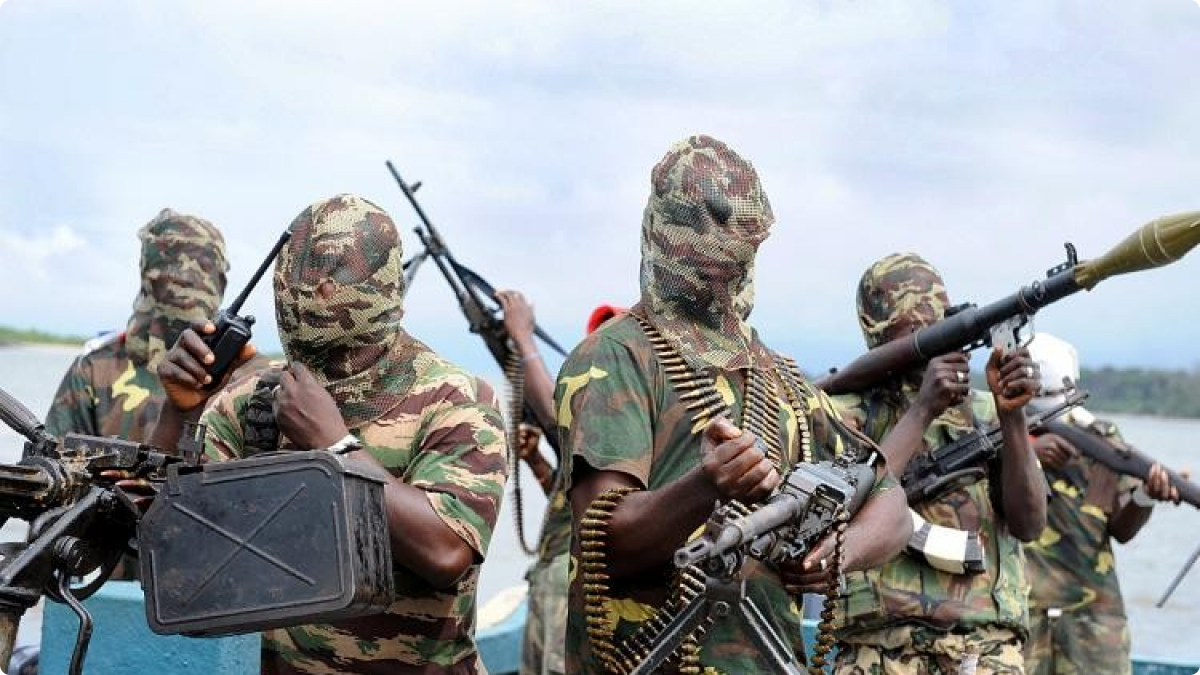
Since the emergence of Boko Haram, the nation has been counting the cost of its failure to properly foster a sense of belonging among Nigerians. It is regrettable that hundreds of innocent lives: men, women and children alike, have been lost to the nefarious activities of this sect. It is equally sad that government at all levels seem to be at a loss as to how to confront this new threat to our national security and way of life as a people.
One way to go about this problem which has become a national catastrophe is through a robust, planned and committed effort to educate the citizenry in civic virtue. People who have an adequate level of national consciousness and a close rapport with their government do not suddenly resort to violence to make their demands known, no matter how objectionable these demands might be.
Boko Haram has struck so much terror into our hearts that, naturally, we are now more concerned about when and where their next attack might be and less about how the extremist Islamist organization came to be. Few may still recall the late Mohammed Yusuf, the alleged leader of the sect and how he endeared himself to the downtrodden elements of the north, the Almajiri lot, through messages and speeches dripping with hatred for government and constituted authorities. In this way, he won many adherents to his cause, thereby filling that void created by government’s lack of sensitivity to the plight of the common man. Although there are other theories that try to link the origin of the sect to political thuggery and the activities of unscrupulous politicians, the bottom line is that just as the minds of men can be corrupted and disposed to wrought evil in society, so can they be recaptured and transformed into forces for good. Civic Education can become that tool for transformation by helping to rekindle in us our sense of civic pride as citizens of one country.
The subject-matter of Civic Education deals with such issues as the right types of attitudes and values, patriotism, respect for human rights, national consciousness and the need to fulfil our civic duties and obligations, to mention but a few. If properly dispensed, these learning experiences can quench the passion that drives terrorism and kindle in its stead a new flame of hope.
It therefore behoves all stakeholders in nation-building to fashion a new mindset in Nigerians from the existing political and social order. The family system must as a matter of fact assume its role once more in society as a strong moral agency. We must start early to instil in our children a sense of civic awareness. The media must continue to play its role as a moderating voice in society by placing civic matters at all times in the public domain. Teachers of Civic Education must learn to teach the subject with a lot of passion; that is one thing they can learn from the character of Mohammed Yusuf. They should go beyond the traditional lecture-recitation style and adopt more effective modes of instruction such as dramatization, role-playing, discussion, computer assisted instruction, etc.
Finally, government, as the agency that occupies the commanding heights of the state, must sound the clarion call to signal the birth of a new era. They can do this by getting the masses involved in issues of governance. Effort must be made to rehabilitate the so-called Almajiri children of the north whose fate have been consigned to misery and destitution in the name of ‘searching for knowledge’. Government agencies like the National Orientation Agency (NOA) must begin to play a proactive role in society through seminars, workshops and reality TV shows. Through these means the goal of the state is properly defined and better understood by all stakeholders. The use of town hall meetings to communicate government policies to the people, though a new trend in our milieu, must be encouraged and sustained. The curriculum on Civic Education must also be reviewed periodically according to the exigencies of time. For as author Bruce Schneier observes, ‘It is the State which educates its citizens in civic virtue, gives them a consciousness of their mission and welds them into unity’.
(Originally published in a school magazine, the BOSSS Light- 1st Edition, 2012).

No comments:
Post a Comment